
Previous | Next | Senate races | Menu
New polls:
Dem pickups: (None)
GOP pickups: (None)
Well, today's post unfolded in an unexpected way. There was a bunch of news we thought we should write up
immediately, rather than waiting until Monday. And once we wrote it up, it was nearly 5,000 words.
If we did questions and answers, and then did the reader question of the week, that would put us between 15,000 and 20,000
words, which is WAY too much. So, we're going to do just the reader question of the week, and then tomorrow we'll do some
questions and some letters.
Oh, and if you are still working on the headline theme, we'll add this hint in: There were 12 possible words we could
have used; we managed to use seven of them.
Department of Justice Releases Tranche of Epstein Files
In a development that will make nobody happy, and that will do nothing to put an end to this story, the Department of Justice "complied" with the law passed by Congress, and released a bunch of files related to Jeffrey Epstein yesterday. The total number of documents is about 120,000. If you are interested in perusing them, you can do so here.
The exact character of the release was as predictable as the exact character of Donald Trump's speech this week. Despite the fact that they've spent months and months going through the files, that they knew for at least 2 months that Congress' order was coming down the pike, and that the law was actually passed a month ago, "Attorney General" Pam Bondi and other Department of Justice leaders said they simply didn't have time to vet everything, and they'll try their darnedest to get to the rest later.
So, it's a very carefully curated set of documents, in other words. And they feature extensive redactions that clearly go way over and above what Congress allowed for. For example, there is a 119-page document, with grand jury testimony, that is 100% redacted (see for yourself, here). There IS a president who appears frequently throughout the collection, but that president is Bill Clinton. By contrast, very few of the released documents contain images of, or references to, Donald Trump. We guess that Clinton was MUCH closer with Epstein than Trump ever was. What other conclusion is there?
Rep. Thomas Massie (R-KY), who was the driving force behind the bill requiring the release of the files, as well as the discharge petition that brought that bill to the floor of the House against the wishes of Speaker Mike Johnson (R-LA), is livid, of course. He says the release "grossly fails to comply with both the spirit and the letter of the law," and he and co-sponsor Rep. Ro Khanna (D-CA) are "exploring all options." However, they forgot one little thing: To put any sort of enforcement mechanism into the legislation. Oops!
One possibility that is being bandied about is impeachment. Whether that is impeachment of Trump, or Bondi, or both is unclear. Surely, this is not the likeliest outcome. However, it's also not impossible. Massie is pretty angry, and it is plausible that he and the three other Republicans who signed the original discharge petition might be willing to sign a second one for a resolution of impeachment. If this did happen, it would be manna from heaven for the Democrats, who could say "How could this be a witch hunt if it happened when the Republicans controlled the House?"
All of this said, one of the four Republican signatories to the original discharge petition is Rep. Marjorie Taylor Greene (R-GA), and she's outta there as of January 5. So, Massie would not only have to hold on to the other two women apostates (Nancy Mace, R-SC and Lauren Boebert, R-CO), he would also have to convince Greene to delay her resignation, or else he would have to find a new apostate. The impeachment resolution could be passed with fewer than 218 votes (since it requires a majority of voting members, and there are vacant seats right now), but the discharge petition itself requires a minimum of 218 signatures.
Meanwhile, we again remain a bit befuddled by the White House's thinking. This was arguably their one shot at a potential "Get Out of Jail Free" card. If they had dumped all the documents at once (and there are at least 150,000 more that have not been released), right before Christmas, the coverage would have been very muted, and would have escaped the notice of many people. But releasing part of them, and daring Massie to do something about it, just keeps the story alive. Also, to be so clumsy in downplaying Trump's participation in the whole thing is just going to give MORE juice to the notion that there's a coverup. They really should have included a few images or documents that were moderately embarrassing for him without being TOO bad. That, at least, would have made it a little harder to be certain that the DoJ was cooking the books.
Incidentally, The New York Times' David Brooks has a landing page on the Times website that proudly declares:
I've tried to present a reasonable voice in the midst of all the bitterness and strife of public life. I've tried to live out a philosophical tradition that has its roots in the thought of people like David Hume, Edmund Burke and Alexander Hamilton, a tradition of thought that sits in the tension between humility and audacity, fair-mindedness and compassion. Like all Times journalists I'm committed to upholding the standards of integrity outlined in our Ethical Journalism Handbook.
As part of that "tradition," presumably, he wrote a piece about a month ago headlined "The Epstein Story? Count Me Out." He argues that Epsteinpot Dome is just a conspiracy theory, cooked up by kooky right wingers, that Democratic politicians have latched onto because their other messaging was not getting through. Brooks asserts that he, for one, does not see the value in pursuing this any further, and advises Democrats that they would be wise to follow suit.
What is driving Brooks' thinking here? Maybe he is just speaking truth to power, the way that David Hume, Edmund Burke and Alexander Hamilton did. Or—and we're just spitballing here—maybe it's because he is among the people who appear in the Epstein files. For example, here he is in one of the Epstein files photos that was released this week:
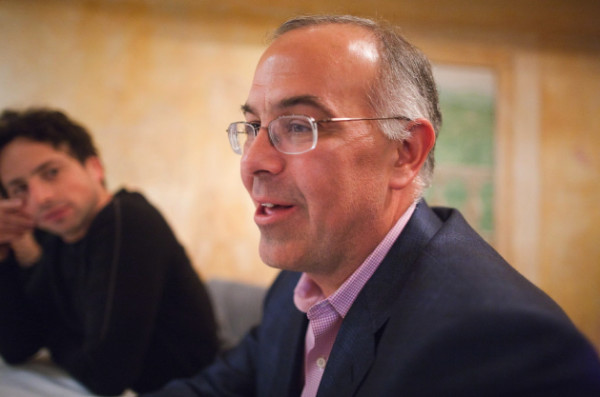
The point here is that there's a LOT of bad-faith rhetoric and a LOT of dishonesty surrounding this Epstein situation. And the worst of it appears, by all evidences, to be coming from the White House. (Z)
Fur Elise? Not Anymore
Earlier this week, we made clear that we simply did not understand the theory behind Rep. Elise Stefanik's (R-NY) run for the governorship of New York. MAGA and the Empire State don't mix in general, and there's every indication that 2026, in particular, is going to be a tough year for Republicans. The fact that Gov. Kathy Hochul (D-NY) is of middling popularity, at best, is not enough to make up for that.
Later in the week, the New Yorkers that Siena College polled made clear that they don't understand the theory of her gubernatorial run, either. According to Siena, Stefanik trailed Hochul by 19 points, 49% to 30%. You cannot explain that away as a mathematical fluke or a wonky sample size, and Stefanik can hardly say "Well, once voters get to know me, my numbers will improve." They already know her; she's the best-known Republican officeholder in the whole state.
Not only do such ghastly numbers represent the writing on the wall for the candidate, they also represent the writing on the wall for potential campaign staffers and, importantly, for donors. You can't run a campaign in New York State without boatloads of money, and nobody is going to donate to you if they think they're throwing their cash into the fireplace. And so, Stefanik got on Twitter yesterday and announced that she's not only dropping her gubernatorial bid, she's also going to retire from Congress at the end of this term. Her official reason is that she wants to spend more time with her family.
Stefanik did not say what the next chapter will be for her. The gubernatorial bid was a long shot, particularly since she would first have to win a tough primary. Clearly, she was ready to leave the House, where upward movement was not in the cards anytime soon, and clearly she was ready for the likelihood that she'd be out of elected office by January of 2027. Donald Trump did try to appoint her to an executive post before (U.N. Ambassador), and he might do it again, especially since, as of January 2027, that would not deprive the House Republican Conference of a vote. Actually, Trump has two potential appointees waiting in the bullpen, in Stefanik and Gov. Glenn Youngkin (R-VA), who will be a free agent in just a few weeks. So, he could cashier a couple of Cabinet secretaries, and replace them with the kind of sycophantic loyalists he loves so dearly.
It's even possible that someone in Trump's orbit approached Stefanik with a deal—drop out in exchange for a future appointment—so as to avoid the aforementioned tough primary. On the other hand, if a spot in the Trump administration is NOT forthcoming, then her next step could be almost anything. She could sign on at one of the right-wing "news" channels, or could join/replace Scott Jennings (who is supposedly pondering a run for governor of Kentucky) as the resident GOP heel at CNN. She could lobby, or could serve on corporate boards, or could teach at a right-wing university, or could try to connect with former senator Kyrsten Sinema and get in on all the grifts that the Arizonan has going these days.
If Trump does not somehow ride to the rescue of Stefanik's career, then she'll become the latest person to have sacrificed her career to MAGA. There is at least a little irony that, if Stefanik had remained a normie Republican, which is what she once was (and what she is, in her heart of hearts), she could have kept getting elected in her R+24 district, and then she probably would have been viable as a candidate for statewide office in New York. But once she crossed over to the dark side, well, there was just no way the voters there were going to make Darth Stefanik their leader. (Z)
Lummis Is Also Done
As long as we are on the subject of MAGA women ending their careers, just minutes after Elise Stefanik ended her gubernatorial run, Sen. Cynthia Lummis (R-WY) announced that she is one-and-done, and that she will not run for reelection. In a statement, she explained: "Deciding not to run for re-election does represent a change of heart for me, but in the difficult, exhausting session weeks this fall I've come to accept that I do not have six more years in me... I am a devout legislator, but I feel like a sprinter in a marathon. The energy required doesn't match up."
Whereas we tend to be skeptical of "I want to spend time with my family," because it's such a cliché and because it takes all responsibility away from the officeholder, we are inclined to believe that Lummis is telling the truth, as she's conceding that it's her own frailties that led to her decision. She's 71, which is middle-aged by U.S. Senate standards, but is getting up there by anyone else's standards. And it really must be exhausting to be a senator representing a Western state with a small population and somewhat dinky airports. If you're Sen. Tim Kaine (D-VA) or Sen. Angela Alsobrooks (D-MD), you don't have to do all that much traveling at all if you don't want to. But from Washington, DC, to Cheyenne, WY, is a 6½ hour flight. Tag on a couple of hours at the start of that to get to the airport and get through security, and an hour at the other end of that to get home, and you're looking at something like 10 hours' travel time and a 2-hour time change every time you go home. And that assumes no delays or other issues. Not easy at any age, but surely even tougher into your mid-to-late 70s (and Lummis would be 78 at the end of another term).
Wyoming is R+23 and the Democratic bench there is thinner than Donald Trump's skin, so the only question next November is which Republican will replace Lummis in the Senate. Given that Lummis' decision was unexpected, and that it came late Friday, there hasn't been time for any serious candidate to declare a run. Rep. Harriet Hageman (R-WY) would be the obvious choice, if you had to bet, but any of the state elected officials, from Gov. Mark Gordon (R-WY) on down, are also possibilities. (Z)
Blow Me... Up
Curtis LeMay is one of the biggest bastards in American history. During World War II, he sat in a comfortable office and figured out the best way to use conventional bombs and landmines to kill as many Japanese civilians as was possible. For the balance of his career, he was a hawk's hawk, and always first in line among presidential advisers to support the use of nuclear weapons. "Bombs Away" LeMay's attitude was, perhaps, most famously expressed when he warned North Vietnam, during the Vietnam War, that the U.S. would bomb them "back to the stone age." After all, all of this bombing was no skin off his nose; LeMay was never in any danger of being bombed himself, or having his family be bombed.
LeMay died in 1990 at March Air Force Base, which is right next to Riverside National Cemetery. This is one of the largest military cemeteries in the United States and the busiest military cemetery in the country (by number of burials) since 2000. Also, as we might have mentioned before, it happens to be where all four of (Z)'s grandparents are interred. Initially, the plan was to take LeMay's corpse next door for interment at Riverside. However, many family members of the veterans there pitched a fit, and did not want the site to be sullied by such a bloodthirsty warmonger. So, LeMay was taken to Colorado and buried at the Air Force Academy.
We mention this because it's hard to think of a better historical analogue to Secretary of Defense Pete Hegseth than Curtis LeMay. Hegseth is also a hawk's hawk who has no apparent regard for the sanctity of human life, and who actually seems to take pleasure from the thought of people being killed, particularly if those people are not white, or are not Christian. And this week, the Secretary tried to take advantage of the lack of fourth-estate oversight that he managed to fashion for himself, and to sneak under the radar a plan for the U.S. to resume the unrestricted use of landmines. However, The Washington Post, which still has a few journalists on staff, and knows a few things about getting information that people in power don't want the paper to have, caught him at it and broke the story yesterday.
Here is the thing about landmines: They are hard to... control, for lack of a better word. Armed forces today don't use the mustard gas of World War I, and the fact that it's an unusually destructive weapon is only part of the reason. The other part is that when you release mustard gas, there's much potential for the winds to shift, with the result that you've managed to gas your own troops. Every military weapon comes with some risk of catastrophic failure, of course, but that risk is just too high with mustard gas for it to be an effective weapon.
Landmines suffer from a similar sort of problem. It's dangerous business trying to lay landmines. It's dangerous business trying to traverse territory that has been mined, even if they are YOUR side's mines and you theoretically know where the mines are. Landmines have also been known to explode spontaneously, particularly when temperature change makes the ground expand and contract. And landmines are tough to remove, such that they are often left behind when no longer needed. That can mean a deadly "surprise" for civilians, often years or decades later. In 2024, for example, over 2,000 civilians were killed by landmines that had been left in the ground by one warring army or another. For all of these reasons, 160 countries signed a 1997 treaty banning the use of landmines worldwide.
The U.S., as is so often the case in these situations, chose not to sign that treaty. However, American policy has been to avoid the use of the armament, nonetheless. The challenge—the temptation, really—is that, despite their downsides, landmines do something that cannot easily be accomplished in other ways. And so, there is a longstanding exception to the U.S. ban on landmines—they've been allowed along the border between North and South Korea, without interruption, since the 1950s. The thinking, obviously, is that no human, military or civilian, is supposed to traverse that border, so the mines keep the peace while not putting innocent lives at risk.
Of course, along the lines of "I'll just have ONE cigarette" or "I'll just have ONE drink," once the door is open a crack, it's easy for it to open much more widely. On the whole, Joe Biden was the least militaristic president the U.S. has had in quite a while, either as far back as Bill Clinton, or maybe as far back as Jimmy Carter, depending on your opinion about Bill Clinton's interventions in Somalia and the Balkans. However, Biden also had to deal with the situation in Ukraine, which meant resisting Russian aggression without putting boots on the ground, and while dealing with members of Congress who were isolationist and/or pro-Russia. Consequently, Biden authorized the use of landmines in Ukraine, while Ukrainian president Volodymyr Zelenskyy promptly announced that his nation would withdraw from the 1997 treaty. Just ONE MORE cigarette...
Now, with the U.S. already having slid a fair way down the slippery landmine slope, Hegseth wants to kick the door all the way open. And, in the hands of a sociopath like him, that is a frightening proposition. In particular, should the administration decide this is an OK plan, how long is it before Hegseth or some other nutter in the government (Kristi Noem? Stephen Miller?) suggests placing mines along the Mexican border?
There's already a lot of damage that's been done here, dating back to Biden and the choices he made. The U.S. may not have signed the landmine treaty, but it still had some moral authority on this subject because it was self-limiting the use of mines. That moral authority is fading by the moment, which in turn invites other nations to say "Just ONE cigarette." And once another big batch of mines is in the ground around the world, whether placed by Americans or by others, the groundwork is laid for many more decades of senseless civilian deaths.
One can only hope that, now that Hegseth's machinations have been exposed to a little sunlight, either public pressure or Congress will serve to foil his plans. Ideally, the door on landmines would be closed entirely, but that's obviously not going to happen while the Ukraine War is underway and while the Koreas are at each other's throats. The best that can be hoped for is that "Landmines Away" Pete is not able to expand things further, the way he so badly wants to. (Z)
Reader Question of the Week: Leisure Where?, Part IV
Here is the question that was asked several weeks ago:
J.H. in Portland, OR, asks: We've seen how many of the Electoral-Vote.com faithful are connected to the computer sciences and now I'm wondering how many are involved with ham radio. I ask this because I wonder if there is a correlation between technical curiosity and experimentation, and the awareness and interest in political events. Or between other areas of interest and interest in political events.
So, I would like to know: What are Electoral-Vote.com readers' hobbies?
If you would like to review, the first entry in the series is here, the second is here and the third is here.
Today, it's readers who cook, who collect, or who do something tech-related for fun:
J.E. in Boone, NC: Retired pastor here. Hobbies are fermenting fruits/vegetables and beer; pickling fruits/vegetables and my liver (?) and creating hot sauces, which some studies have shown can be protective for your liver!
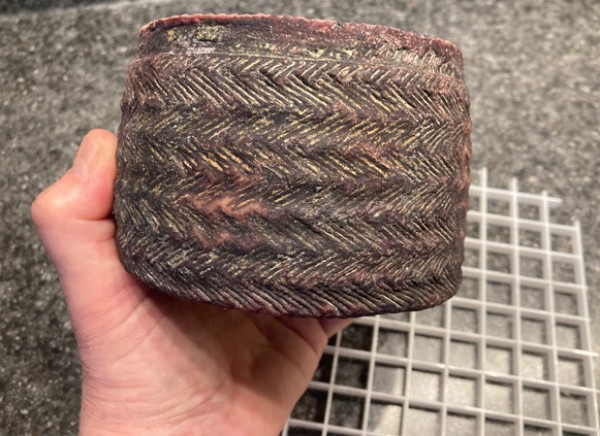
R.P. in Marquette, MI: Cheesemaking! Here's a cabra al vino:
L.G. in Waltham, MA: Retired physician now indulging in gardening (veggies, fruits, flowers and trees) and cooking.
D.R. in Harrisburg, PA: For the last 23 years, one of my many hobbies has been collecting slide charts and wheel charts. With over 3,100 of them, I decided to apply for a Guinness World Record ("World's Largest Collection of Slide Charts") which I received this year. Hard work but a labor of love.
Another serious hobby I love is doing copy editing for Electoral-Vote.com. Finding and reporting typically 2 to 6 'Corrections' (typos and grammar errors) each day is as enjoyable as my daily sudoku puzzle. I'm not very interested in history or politics (electrical engineering, math and physics are my fortes), but reading Electoral-Vote.com lets me know at least that I am not totally ignorant of these things.
A.S. in Black Mountain, NC: I was a collector, up until we had to downsize for a smaller retirement situation. I collected safety razors and their paraphernalia. The development and innovations are varied and sometimes ridiculous. Some of the older ones are absolutely beautiful and expensive.
I also collected bananaphernalia. Everything from salt and pepper shakers to ties to harmonicas to phones. I kept the salt and pepper shakers (small!) but sold everything else to The International Banana Museum in Mecca, CA, that is now closed.
And I'm an artist. but that is much more serious than it is a hobby, considering I earned a couple art degrees.
S.S. in West Hollywood, CA: My hobbies? Well, I often explain that I follow politics the way others follow sports. Except with politics it matters who wins. I've never had any interest in actual sports. What I've read about them at Electoral-Vote.com is the most exposure I've ever had.
I learned to read from comic books my grandfather gave me. That was the start of a lifelong hobby (some would call it an obsession). I currently have about 60,000 comics. Plus a large collection of action figures, movie and Broadway posters, Playbills, fast food toys, autographed photos, DVDs, VHS tapes, CDs, and original film and TV scripts. As well as all kinds of other theater, film, comic book/superhero, political, and other miscellaneous collectibles including some rare albums and historical LGBT material. I admit I wish it was all better organized, but my home is not nearly as scary as you are probably imagining right now. (The large storage unit helps.)
I'm also a big television and film watcher. I vote for the Emmy, Producers Guild, Hollywood Independent Spirit, International Documentary and Razzie Awards. That's not boasting, it's the justification I use for all the films watched and television binged. I also do short film reviews at Letterboxd. For what it's worth, I have an almost unbroken record of winning the Oscar pool at whatever party I end up at. (Okay, that's boasting.)
I'm now at the stage of my life where I'm trying to figure out the best way to sell my collectibles. If any readers have suggestions and/or L.A. locals are interested in coming to some kind of arrangement, please reach out through Electoral-Vote.com.
D.G. in Palo Alto, CA: I've lived in parallel tracks since junior high school: One is academic/intellectual/professional and the other is expressive/emotional/hobbyist. All the latter revolve around a core of passion for music (non-operatic or classical).
I sang doo-wop growing up in White Plains, NY. As the Beatles hit our shores I arrived at Amherst College, where my freshman roommate, also a music fanatic, taught me to play guitar. Together we wrote, sang and played rock songs; we also joined the Zumbyes, a close-harmony a capella triple quartet that traveled the East Coast college circuit. As "The Fools," a rock band which I fronted, we also played gigs at local venues. A really solid foundation in singing and playing music. I continued to listen avidly and collect rock, soul and jazz music after college, but never again had such appealing opportunities to perform.
While teaching junior high in Philadelphia (an alternative to Vietnam War service), I heard and taped a 24-hour history of rock and roll on the radio. I also read Charlie Gillette's The Sound of the City, the first deep history of rock. And so I became fascinated with tracing this history through my own collecting. Meanwhile, I had developed interests in baseball statistics and rankings of everything from size of city to greatest ballplayer to best-selling records. I spent hundreds of hours copying chart data from the public library's microfilm collection of weekly Billboard magazines, and on my own initiative compiled a proprietary ranking of the Top 1000 Hits of All-Time (then, 1955-1969). In its 75th anniversary issue, Billboard published my work and continued to sell my annual updates for the next seven years. My first published gig in the music biz.
Upon hearing British imports of Beatles albums, I became attuned to the audiophile aspect of record collecting. This became yet another dimension of my hobby. Now I aimed to own the best-sounding versions of all the music I most loved. Combining history, sound quality, and original release and chart data, I became somewhat of a "scholar" of this subject. When CDs arrived on the scene, I enjoyed a seven-year career as music journalist for digital audio and rock and roll disc magazines, critiquing new CD releases across decades and genres. Record companies sent me literally thousands of CDs, which allowed me to "perfect" my own collection without breaking the bank.
After retiring from professional work I launched Rock 'n' Soul Alley, a now-defunct website, which included a timeline (in precise chronological order) of 2,400 songs from 1945-2014, a Pantheon of Artists in tiers of excellence across seven time periods, and a database of my CD collection with ratings of excellence and sound quality for each CD or set. It never got off the ground because it was designed on the cheap for a pre-social media era, and I never put in the time or money to make a serious go of it.
My collection evolved from vinyl to CDs to music files, but I have not gotten into streaming. I have over 55,000 songs on my removable drive, and continue to add new music as I discover it. What has remained a constant to this day is the core activity of making and listening to my own playlists. For me, the acts of listening, conceiving a playlist project, the focused listening involved in choosing and sequencing the tracks, and the iterations needed to perfect the concept—all these are my creative expression, with the added joy of then listening to the product (and sharing it with my music buddies) afterwards. I have made well over 600 playlists over the 55 years it has been my passion. (Fortunately, my wife loves my playlists and enjoys dancing to the more rhythmic ones. And that's an understatement!)
E.S. in Providence, RI: My hobby is my vinyl/CD collection. Whenever I drive by a thrift store/yard sale/flea market, I always stop to look through the used music bin. I don't buy online because for me it's all about the thrill of the hunt.
B.P. in Arlington Heights, IL: My background is in psychology, and I have worked in that field and in social work, exclusively with children, for more than 35 years. But my other passions are music and collecting. I play multiple instruments and have written and recorded dozens of songs, both serious and comic, and my humorous songs were played several times over the course of the last 15 years or so of The Dr. Demento Show (which ended earlier this year, after 55 years).
I also am a huge collector of recorded sound in virtually any format (except the awful 8-tracks), and have perhaps 10,000 records, tapes, etc. My passion for the last 30 years or more, though, has been finding obscure, rare and even one-of-a-kind recordings on reel-to-reel tapes, anything from radio recordings (going back to 1947) to TV shows, to tapes of commercials, to recordings of live events to home recordings of friendly gatherings and much, much more. For more than 15 years, I've been sharing the most interesting of these on blogs, the last 10 of those years on my own site. The other thing I collect obsessively are examples of an odd, only-could-happen-in-America type of record called Song-Poem Records (look it up), and I have been sharing elements of those records on a different blog since 2009.
A.B. in Wendell, NC: I am a numismatist. That is a fancy word for a coin collector. Unlike many collectors, I am not particularly interested in the monetary value of coins, but the historical value. To that end, I actually wish I had some of the very limited still-surviving Confederate coinage. But I don't, and likely could never afford it.
I have two prized coins, one being an 1842 Large Cent, back when they made pennies the size of half-dollars. When I look at that coin, and realize Abraham Lincoln may have once held it... it's kinda awesome. My other is an 1867 2-cent piece—yes, they actually used to make a 2 cent coin, and I think they should do THAT again instead of getting rid of pennies. With a 2-cent coin, you'd never need more than one penny in any transaction, thus penny production could be cut by half to two-thirds. I also have coinage from 44 different countries, and also own some very rare World War II scrip dollars. None of it is monetarily worth much, but the historical value is high. I intend, when I go, for the collection to go to a local VFW post or something, so that it may be enjoyed by others. I also collect some paper money, but only really special stuff. I have a ton of $2 bills, and a few Silver Certificates of various denominations.
M.B. in San Antonio, TX: This has come up before, but there are a few Electoral-Vote.com readers who are philatelists, i.e. stamp collectors. A propos of nothing, this is one of my favorite stamps, from French Polynesia, 1958:

S.H. in Tigard, OR: Wine label collecting!
L.B. in Boise, ID: When I am not rubbernecking on the disaster that is the slow motion train wreck of our democracy, I collect vintage cars. I like to say that the ones I collect are visually stunning pieces of art, and technically amazing pieces of engineering, and while I like the cars, it is the people that I love. I meet people from around the country and around the world. Being highly connected in the field helps with this (most people who collect the same cars as me, and see my initials and location, will know who I am). Virtually every time I get gas, someone comments on my car, while random people talk to me and tell stories every time I go on a road trip. To me, life is an adventure and the things we do and the people we meet are what makes this all worthwhile. Having a fun hobby is a great way to make things happen in your life. It is also nice knowing that when people see me enjoying my hobby, it brightens their day—they generally smile, often wave or give thumbs up and sometimes take pictures or video with their phones.
T.B. in Wiscasset, ME: Now that I am "retired," I spend my "spare time" (What is that?) repairing antique Volvos and rebuilding SU carburetors for people all over the planet.
I also publish an occasional blog post wherein I try to disseminate information that I hope will be useful to someone faced with doing a difficult or unusual repair.
R.P. in Kāneʻohe, HI: As a child, my passions included catching fish and keeping them in aquariums, SCUBA diving, creating software programs (especially databases) on my dad's Apple II+ computer, and re-designing and re-building my bicycle in various ways (among other garage engineering projects).
As an adult, my two primary (and concurrent) roles in my salaried job (which I've had for nearly 40 years) are as a marine biologist, and as a web/database programmer/software engineer. On the side, I've also been a paid contract mechanical engineer to design advanced diving equipment. The transition from my amateur and uncompensated childhood passions into the very same passions as an adult (except now professional and compensated) was entirely seamless. It is only in hindsight after nearly six decades on this planet that I have come to realize that I somehow managed to orchestrate the perfect life (at least, so far). To be fair, there are two other things I enjoy doing that are not part of my profession: (1) watching movies (my tastes align with those of Z's almost—but not quite—perfectly); and (2) losing to my son playing a version of 2-person, 4-way chess that he and I invented. Oh, and of course, also reading Electoral-Vote.com. Every. Single. Day.
H.B. in State College, PA: Starting from about the age of 9, my hobby was astronomy.
Somehow I never outgrew it, and found that I could actually be paid to pursue my hobby... as a professor of astronomy, an involvement with the Hubble Space Telescope, and now as an astronomer emeritus still getting observations and writing papers about them.
It sure beats working for a living.
R.H. in Macungie, PA: My all consuming hobby is astronomy, but it has morphed over time. I started with observing using a telescope but rarely do so any more except for comets and solar eclipses. Over time my interests expanded into:
- Astrophotography (back in the film era before digital)
- Collecting meteorites
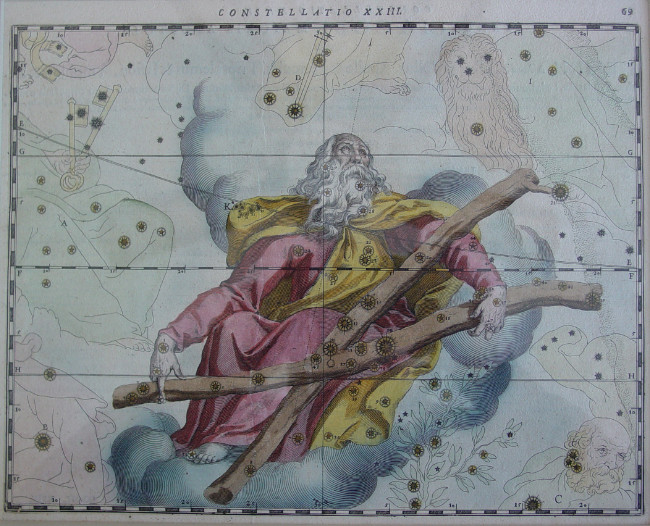
- Collecting antique star charts and atlases
I've also lectured extensively over the years about these topics and had some articles on the history of celestial cartography published in Sky and Telescope magazine. My wife doesn't share my interest in astronomy but loves helping me frame star charts like this one as works of art:
A.G. (KC2KNQ) in Scranton, PA: Radio operator/artillery surveyor for the United States Army and (supposedly) a radio repairman—among many other roles—for the United States Marine Corps.
My radio specialty (self-appointed and willingly given up by others the role had been foisted upon) was antennas. I like designing them, toying around with ideas the math says shouldn't work.
I am a very proud commercial aviator and great nephew of a pioneering WAAC. I was qualified as a commercial aviator by my great aunt's best friend in the WAACs, 53 years later. We figured that out during the flight test.
I hold patents in silica manufacturing related to hydraulic fracturing, industrial preventative maintenance, a restraint device that is pending, a short haul intermodal platform that is pending, a design for a conveyor pulley cleaner that was bought by a mining firm, and I occasionally just design things while "working" in my truck.
Writing is something so much more than a hobby to me, but it's also what I do in my spare time because I love it. Without writing, in the past I would have died. Life would be meaningless at this point without a pen and paper so without writing I would still die. Words were the only things my abusive upbringing couldn't take from me and words were the only thing that got me through it. I refer to them as my shield in my left hand and my sword in my right. Truly, they are.
J.R. (W9TXU) in Heyworth, IL: I became interested in ham radio and electronics in my grade-school days and was licensed in the early 80s. That led to my continuing hobby of collecting and restoring antique radios, along with earning a private pilot's license along the way. My love of technology ultimately led to a career in computers and IT from when I bought my first (a TI-99/4A) in 1983. I was studying to be a Spanish teacher, but the computer changed all that!.
My experience is that the skills required for a career in technology include critical thinking, observation and awareness of the world around one. Also, having an interest in politics ever since I saw some of the William F. Buckley/Gore Vidal debates in 1968, I've found over the years that the two areas of interest do indeed complement each other nicely. As we know, politics and technology often meet head-on, with what we call in the biz "unpredictable results!"
T.S. in Maple Heights, OH: Also a licensed ham. (Hmmm... maybe Electoral-Vote.com can have its own "Echo-Victor.Net.") I have engaged in work-mission trips through the church. I also engage in online gaming and have been a volunteer firefighter in a couple of communities where I have lived. I have also just had my first experience as a poll worker on November 4. I like to travel internationally when I can afford it.
W.R. in Fayetteville, AR: I have been an amateur radio operator for over 50 years; I hold an Amateur Extra Class license. I have also developed on my own some knowledge of computers and networking over the years from the experiences of being a ham radio operator.
I am retired now (73 years old) and still enjoy (and sometimes cuss at) working on ham radio gear, computers, and my very own home network in order to keep my mind sharp! I also work on audio recording using computers in the preparation of amateur radio presentations.
Best regards! (73 in ham radio)
D.M. (aka NQ4S) in McLean, VA: I've been a reader of Electoral-Vote.com since its inaugural year in 2004. I'm a software engineer who started to self-learn programming as a teenager, over 40 years ago. And, yes, I am involved with ham radio. I'm not active these days—funny how starting a family can interfere with hobbies—but I do still maintain my license and maintain a membership with ARRL (the American Radio Relay League). When I was active, I used to gravitate towards contesting (trying to contact many other people over a set period of time) and particularly using digital modes. Digital modes in amateur radio allows combining my love of working with computers with my interest in the challenges to contact far away places with very little power. My greatest accomplishment was getting a confirmed contact with someone in New Zealand over RTTY using only 100W through a 60-foot tuned loop of wire in my townhouse's attic.
D.K. in Stony Brook, NY: Aviation. Flying small planes around the Northeast—single engine propeller. Good for getting off Long Island without fighting the traffic of New York City or the delay of the ferry to Connecticut. It puts big chunks of upstate NY, NJ, PA, CT, RI, MA, VT and NH within easy reach. Maine has a lovely coastline, very scenic, but takes a bit longer to get to.
J.S. in Peterborough, ON, Canada: My hobby of following USA (and world) politics is largely motivated by my belief that climate change is an existential threat to humanity, and that we have to keep aware of developments (political and otherwise) that affect it.
This doesn't connect very much to my other hobbies, which I'll get to. It connects more to my former electronics career (I'm retired now), in which I worked on (among other things) instrumentation to measure atmospheric pollution. There are many parallels between electronics and earth science: capacitance, resistance, non-linearity, feedback, transport delay, thermal runaway, etc.
Electronics is one of my hobbies, and has been all along. The closest I got to ham radio was (in my teens) to build and briefly test a couple of low power (sub-milliwatt, probably) transmitters in the AM, short wave, and FM bands. Other than that I do (in no particular order) carpentry, reading, lighting, cooking, solar power, photography and gardening.
B.C. in Phoenix, AZ: I spent the last 40 years of my working life providing IT support for companies in the Architectural, Engineering and Construction (AEC) industry. About 25 years ago I started using Linux to set up secure file sharing for clients whose FTP servers had been turned into porn sites. At that time, I also began using Linux on some of my own homebuilt workstations; primarily to avoid having to purchase a Windows license.
My neighborhood has lots of retirees like me. They purchased home computers between 5 and 15 years ago, and many of those boxes fall short of the hardware requirements for Windows 11. Since Windows 10 reached end of life earlier this year, and will no longer receive security updates unless some additional money is ponied up, these folks on fixed incomes are in a real bind.
Although I know how to bypass the hardware limitations by building a tweaked USB install drive, I've never thought that was a good idea. You never know if or when Microsoft will just cut off that option by making some changes to the install process. Also, word has it that Microsoft is going to further limit the ability to use a local user on Windows 11 machines, and you will need to have a "Microsoft account" to log in and use it. With all the health portals, bank portals, and other portals retired folks have to deal with, they do not need yet another user name and password. Also, Linux simply runs better on the older hardware than Windows 10 or Windows 11, with the bonus of avoiding all the obnoxious popups and other stuff.
So my primary hobby these days is helping my fellow retirees avoid the expense of buying a new computer by migrating their current machines to Linux. It keeps my brain sharper, and it is a real joy to hear an 80-year-old grandmother exclaim that her 10-year-old HP Envy Touchscreen laptop runs "better than it did before!"
M.C. in Centralia, IL: Amateur mineralogy. Love all kinds of rocks. Joining a club allowed me to meet a very diverse demographic.
J.B.C. in St. Louis, MO: I suspect J.H. in Portland may be on to something. While not necessarily limited to the various computer sciences, I'm betting a great number of these responses are going to be technical in nature and require some degree of higher education, curiosity, and a broad interest in what makes things tick.
Personally, my primary hobby is "messing around with technology." Technically, that means taking my work home—computer and network systems administration. My own home computer lab has at times rivaled the employer's data center (primarily because I was allowed to take home all the off-lease stuff that would otherwise have been recycled). When I was younger, I used to collect VAX—during the peak of my collection I had a VAX 4000/200 (with the QDSS Dragon Video adapter), a VAXStation 4000/60, two MicroVAX III systems, and a dozen VAXStation 3100s, all networked together running NetBSD. I did still know VMS back then, but getting the hobby licenses for it was a pain, when it was even possible. The 4000/200 had a pair of QBUS HVD SCSI controllers, and I had a rack filled with 500 MB drives connected to it. Eventually I had to get rid of most of it just because of the power draw and space requirements for it all, although I still have the BA213 cabinet the 4000/200 was in—I want to modify it into a retro PC case someday.
For years I was a programmer—learned BASIC on a Tandy Color Computer 2, Pascal on a PDP11/70, C on a 286 and C++ on a Pentium; dabbled in PHP and Powershell and trying to pick up C# now.
Other hobbies are model building (started with REVELL kits, now I sometimes do Gunpla), LEGO, electronics tinkering (x00-in-one kits were my favorite gifts when I was a kid).
One of my favorite, but least-exercised hobbies, though, is collecting and restoring 70's era mechanical Pachinko machines. All of this amazing engineering, powered by balancing balls rolling around in chutes and tripping catches, latches, and everything else. I have 3 in working order, two that need new glass and some light work and one that... well, I can pull parts from it, I suppose.
In the next, and final, entry in this series, we'll have some hobbies that we could not easily categorize, as well as a reader survey.
Previous | Next
Main page for smartphones