January Candidate List
Below is the January list of 2016 Republican presidential candidates in roughly the order of most likely to be nominated to least likely. The strengths and weaknesses of each one in the primaries are listed. Note that what is a strength in the primaries may be a weakness in the general election and vice versa. For example, Jeb Bush's wife is a Mexican-American, which may hurt him in the primaries but help him in the general election.
| Candidate | Advantages in Primaries | Disadvantages in Primaries |
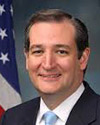 Ted Cruz |
|
|
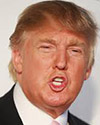 Donald Trump |
|
|
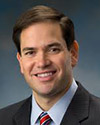 Marco Rubio |
|
|
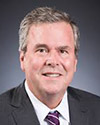 Jeb Bush |
|
|
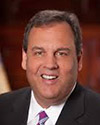 Chris Christie |
|
|
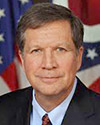 John Kasich |
|
|
 Carly Fiorina |
|
|
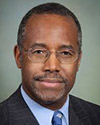 Ben Carson |
|
|
 Rand Paul |
|
|
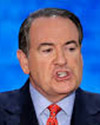 Mike Huckabee |
|
|
 Rick Santorum |
|
|
 Jim Gilmore |
|
|
Rundown of Republican Primaries and Caucuses
The Republican National Committee gives each state a fair amount of freedom in choosing its delegates to the Republican National Convention. The number of delegates allocated to each state is determined by a complicated formula. The formula starts with population, but then adds bonus delegates to states that Romney carried in 2012. States also get bonus delegates for electing Republicans as governor, senator, or member of the House. Finally, the three RNC members from each state get to go to the convention. Here is a simplified table.
How the delegates are allocated to candidates is a complex process and different for each state. Many states have a certain number of delegates chosen by the statewide vote. Before March 15, these are awarded proportionally to the statewide vote—but with a catch: States may set a threshold. Some states have set it to 20%, meaning that when divvying up the statewide delegates, only candidates above the threshold get any delegates. These rules were adopted three years ago when no one was expecting that nearly all the candidates would be below 20%. For example, if Donald Trump gets 25% of the vote, Sen. Ted Cruz (R-TX) gets 20%, and everyone else gets less than 20%, then Trump gets 25/45 of the delegates and Cruz gets 20/45. The others get nothing.
Many states allocate some delegates statewide and some by congressional district (CD). Often the rules are different for statewide delegates and CD delegates. In the statewide contests, people vote for a candidate, such as Trump, Cruz, Rubio, etc. However, in some of the CD contests, people vote for the actual delegates, who may or may not be bound to vote for the candidate they claim to support. Thus a voter might see a ballot with the well-known candidates on the top part (statewide) and Jim Wilson, Mary Smith, Tom Edwards, and Nancy Jones as the delegate candidates on the bottom part, possibly indicating who they favor (but not necessarily).
Finally, just to make it more interesting, states with caucuses generally have a multilevel system. In Iowa, for example, what actually will happen on Feb. 1 is that people will gather in Iowa's 1,681 precincts and elect people to attend the 99 county caucuses a month later. They are bound to vote there for the candidate they supported in the precinct caucus. The county caucuses elect delegates to the four CD caucuses, where delegates to the state caucus are elected. The state caucus chooses the delegates to the Republican National Convention. Thus the voting on Feb. 1 at the precinct caucuses doesn't really indicate how many convention delegates each candidate has, but it gives a general indication.
Here is a table giving a rough summary of the process. The data are from Time Magazine. All elections are primaries unless stated otherwise.
| Date | State | Delegates | Thresh. | Notes |
| Feb. 1 | Iowa | 30 | Caucus; proportional | |
| Feb. 9 | New Hampshire | 23 | 10% | Proportional |
| Feb. 20 | South Carolina | 50 | Winner take all statewide and also per CD | |
| Feb. 23 | Nevada | 30 | Caucus; proportional | |
| Mar. 1 | Alabama | 50 | 20% | Proportional |
| Mar. 1 | Alaska | 28 | 13% | Caucus; proportional |
| Mar. 1 | Arkansas | 40 | 15% | Proportional |
| Mar. 1 | Georgia | 76 | 20% | Proportional |
| Mar. 1 | Massachusetts | 42 | 5% | Proportional |
| Mar. 1 | Minnesota | 38 | 10% | Caucus; proportional |
| Mar. 1 | North Dakota | 28 | Caucus but none of the delegates are bound | |
| Mar. 1 | Oklahoma | 43 | 15% | Proportional |
| Mar. 1 | Tennessee | 58 | 20% | Proportional |
| Mar. 1 | Texas | 155 | 20% | Proportional |
| Mar. 1 | Vermont | 16 | 20% | Proportional |
| Mar. 1 | Virginia | 49 | Proportional | |
| Mar. 1 | Wyoming | 29 | Caucus but none of the delegates are bound | |
| Mar. 5 | Kansas | 40 | 10% | Caucus; proportional |
| Mar. 5 | Kentucky | 45 | 5% | Caucus; proportional |
| Mar. 5 | Louisiana | 46 | 20% | Proportional with 20% threshold statewide; none for CDs |
| Mar. 5 | Maine | 23 | 10% | Proportional |
| Mar. 6 | Puerto Rico | 23 | 20% | Proportional |
| Mar. 8 | Hawaii | 19 | Caucus; proportional | |
| Mar. 8 | Idaho | 32 | 20% | Proportional |
| Mar. 8 | Michigan | 59 | 15% | Proportional |
| Mar. 8 | Mississippi | 39 | 15% | Proportional |
| Mar. 12 | D.C. | 19 | 15% | Convention |
| Mar. 12 | Guam | 9 | Convention but none of the delegates are bound | |
| Mar. 15 | Florida | 99 | Winner take all | |
| Mar. 15 | Illinois | 69 | Statewide winner take all; CD delegates elected personally | |
| Mar. 15 | Missouri | 52 | Above 50%, then winner take all; else WTA by CD | |
| Mar. 15 | North Carolina | 72 | Proportional | |
| Mar. 15 | Northern Marianas | 9 | Winner take all | |
| Mar. 15 | Ohio | 66 | Winner take all | |
| Mar. 19 | Virgin Islands | 9 | Winner take all | |
| Mar. 22 | American Samoa | 9 | Convention; delegates elected personally | |
| Mar. 22 | Arizona | 58 | Winner take all | |
| Mar. 22 | Utah | 40 | 15% | Caucus; proportional |
| Apr. 5 | Wisconsin | 42 | Winner take all statewide and by CD | |
| Apr. 9 | Colorado | 37 | Convention; delegates elected personally and bound | |
| Apr. 19 | New York | 95 | 20% | Proportional |
| Apr. 26 | Connecticut | 28 | 20% | Above 50%, then winner take all; WTA by CD |
| Apr. 26 | Delaware | 16 | Winner take all | |
| Apr. 26 | Maryland | 38 | Winner take all | |
| Apr. 26 | Pennsylvania | 71 | Winner take all statewide; rest elected personally and unbound | |
| Apr. 26 | Rhode Island | 19 | 10% | Proportional |
| May 3 | Indiana | 57 | Winner take all statewide and by CD | |
| May 10 | Nebraska | 36 | Winner take all | |
| May 10 | West Virginia | 34 | Delegates elected personally and bound | |
| May 17 | Oregon | 28 | Proportional | |
| May 27 | Washington | 41 | 20% | Proportional |
| Jun. 7 | California | 172 | Winner take all statewide and by CD | |
| Jun. 7 | Montana | 27 | Winner take all | |
| Jun. 7 | New Jersey | 51 | Winner take all | |
| Jun. 7 | New Mexico | 24 | 15% | Proportional |
| Jun. 7 | South Dakota | 29 | Winner take all |
If the nomination is close or if no candidate clearly has a majority, the details may matter a lot. If you are a real delegate-counting nerd, this detailed piece may be of interest. Also of interest to number crunchers is this table showing the cumulative percentage of delegates chosen by any given date. For example, on Feb. 29, 5.4% of the delegates will have been chosen, but on March 2, that number jumps to 29.8%. On March 16, it becomes 57.7%, so we will certainly have some clarity by then, with winner-take-all Florida and Ohio having voted the day before. (V)
Everyone's Angry about Something
A new Esquire/NBC News/Survey Monkey online poll shows that Americans are pretty angry, although different groups are angry about different things. Many questions were asked so you have to read the whole story to get a feel for who is angry about what. Here are just a few Q & A's.
Q: What's your sense of America's place in the world?
- The U.S. is the most powerful country in the world (41%)
- The U.S. was once the most powerful country but isn't any more (54%)
- The U.S. was never the most powerful country (4%)
Hello, Donald Trump. He's got this one down pat. It's on his hat. More than half the people perceive that U.S. is no longer #1 and they are angry about it. There was no follow-up follow-up question though, namely, who is #1 now? Russia? It's a poor third-world kleptocracy. China? A communist dictatorship. Japan? Maybe 25 years ago, but not now. The U.K.? Maybe 150 years ago. Denmark? Bernie Sanders thinks so and its people are very happy, but it is hardly a world power. By any conceivable measure, the U.S. was and is the most powerful country but people have been told it's not by various right-wing media outlets and they believe it.
Q: How does your financial situation compare to what you expected when you were younger?
- I'm better off than I thought I'd be (22%)
- I'm about where I thought I'd be (23%)
- I'm worse off than I thought I would be (54%)
These two questions lie at the core of the populist appeal: America is going down the tubes and the American Dream is dead. Interestingly enough, whites are more likely to complain here than blacks and blame it more on external circumstances than bad personal choices. Whites are also more likely than blacks to get angry multiple times a day.
Republicans are angriest about
- Congress being dysfunctional (80%)
- Massive consumer fraud (80%)
- Cops shooting an unarmed black man (65%)
Democrats are angriest about
- Cops shooting an unarmed black man (84%)
- Massive consumer fraud (83%)
- Billionaire vowing to spend $500 million on 2016 elections (80%)
The survey goes on and on about many other topics. (V)
Three-time Loser Endorses Carly Fiorina in New Hampshire
NBC has a story with the headline: "Carly Fiorina Wins Key Endorsement in New Hampshire." That sounds great for Fiorina until we get into the details a bit more. The endorser is Ovide Lamontagne and he is signing on as her state chairman. He said: "In my opinion, Carly is the most conservative candidate who can win." But who is Lamontagne, exactly? He ran for governor in 1996. Now-senator Jean Shaheen (D) crushed him by 17 points. Then he ran for the Senate in 2010. He didn't even win the Republican primary. In 2012 he ran for governor again. He was crushed by Gov. Maggie Hassan (D-NH) by 12 points.
The point of this news item is not to show that Fiorina is going nowhere in New Hampshire (though that's true) and has signed up third-rate talent to run the show for her. It is to point out how the media often distort the news. To say that a guy who has run for statewide office three times and was decisively defeated each time is somehow a key endorser is very misleading. There are plenty of important Republicans in New Hampshire, including former governors John Sununu, Judd Gregg, Steve Merrill, and Craig Benson, whose endorsement might be worth something, but why does NBC think the endorsement of a three-time loser is a "key endorsement"? Caveat lector. (V)
Back to the main page