Previous | Next
List of Republicans in Order of Likelihood of Getting Nomination
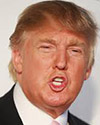
Every month this cycle we have posted a list of the Republican candidates in order of their chances of getting the nomination. It has been such a wild and wacky year that we ought to know better than to try again, but we got a new USB 3.0 crystal ball and plugged it into the computer, so here we go for better (unlikely) or worse (probably). Below is the current list of Republican candidates in roughly the order of most likely to be chosen as their party's nominee to least likely. In previous iterations, we have considered the factors that primary voters may weigh; now we will begin to consider the factors that the conventioneers and the party leadership will have to weigh. Note that some things that may have been helpful in the primaries could be liabilities in the general election. For example, Donald Trump is anti-immigrant, which allowed him to become the frontrunner in the primaries, but will certainly hurt him in the general election
| Candidate | Advantages | Disadvantages |
 Donald Trump |
|
|
 Paul Ryan |
|
|
 Ted Cruz |
|
|
 Mitt Romney |
|
|
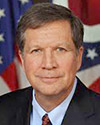 John Kasich |
|
|
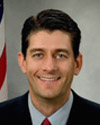
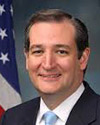
It now appears that Trump will come to the convention with around 1,200-1,240 or so pledged delegates, but it matters a lot if he comes in above or below the 1,237 mark. If he makes it, he will probably be the nominee. The price the GOP would pay for going nuclear and stealing it from him would be too high. If he misses the mark, he will start bleeding delegates very rapidly and by the third ballot, most will be free agents and are likely to do what the party leadership wants, which is to nominate Speaker Paul Ryan. Neither Trump nor Cruz is going to like this, so it could get very messy. (Z & V)
Priebus Predicts It Will Be Trump, Cruz, or Kasich
RNC chairman Reince Priebus predicted yesterday on Fox News Sunday that the Republican presidential nominee will be one of the candidates currently running: Donald Trump, Sen. Ted Cruz (R-TX), or Gov. John Kasich (R-OH). However, he didn't completely rule out the possibility of a multiballot convention with a dark horse winning on the fifth, sixth or seventh ballot.
He also said that Trump's threat to run as an independent if he is not treated fairly makes it harder for him to win. Then he added:
If you were running for president of the Kiwanis Club or the Boy Scouts and you said you don't know if you like the Kiwanis or the Boy Scouts, I think that makes your challenge even greater to ultimately win those kinds of posts. It's no different for the Republican Party.
This could be the key justification for nominating Ryan on the seventh ballot if need be: Trump is not a team player.
Before the South Carolina primary, all 17 candidates signed a written pledge to support the Republican nominee. Originally the idea was to force Trump to give up the idea of running as an independent if he lost, but the idea backfired. Now Cruz and Kasich are bound to supporting Trump if he wins, something neither one wants to do. Both have since backed out of their pledges. In truth, the original pledges were never worth the paper they were written on. (V)
Is The Donald's Goose Cooked?
The punditry incorrectly predicted the decline and fall of Donald Trump so many times in late 2015 and early 2016 that they became a bit gun shy. After a very bad week for the frontrunner, however, they are back at it, with pieces in both the Washington Post and Time declaring that the beginning of the end is upon us.
The argument made by both authors is similar, and echoes points that have been made on this site and by many other commentators. First, Trump has a "women" problem. You simply can't say so many sexist things, and also continue to employ a campaign manager who (allegedly) assaults women, in a world where women make up half the electorate. Second, Trump has a math problem. He's going to have a rough time making it to 1,237 delegates, and if (when?) he loses Wisconsin, that task will become much harder.
The Washington Post piece also goes further, imagining that the Wisconsin loss will likely have a domino effect, putting Trump in jeopardy in the remaining delegate-rich states: New Jersey, California, and even his home state of New York. And the further he falls short of 1,237, the weaker Trump's case is that he should be the nominee anyhow, and the weaker is his basis for a third-party run. And so, they may have waited until the very last minute, but it certainly seems plausible that the GOP may have dodged the Trump bullet after all. The only real problem is: Who will be the nominee? The pooh-bahs hate Cruz almost as much as they hate Trump. Nominating Ryan on the seventh ballot by a handful of votes is hardly a way to create party unity. (Z)
Over 100 Delegates Will Desert Trump on the Second Ballot
If Donald Trump fails to get the 1,237 delegates he needs on the first ballot, he is going to suffer major defections on the second one. Most of the 168 members of the Republican National Committee are bound to their state's winner on the first ballot but are free afterwards, and only one of them, Diana Orrock of Nevada, has come out in favor of Trump. He could easily lose 100 RNC members as soon as they are free to vote as they wish. Trump is beginning to understand that the race is about who has the most delegates, not who has the most tweets, and has hired convention veteran Paul Manafort to see to the unseemly business of coralling individual delegates. Trump's big problem is that he is almost nobody's second choice. On the second ballot, he would bleed delegates badly, but few of the delegates released after the first ballot would gravitate to him. Many would go to Cruz and perhaps some to Kasich. For Trump, it is really: First ballot or bust. (V)
Hillary Clinton Runs Her First Ad in New York
With Sen. Bernie Sanders (I-VT) expected to win in Wisconsin tomorrow and in Wyoming on Saturday, Hillary Clinton has turned her sights to New York, whose primary is April 19. Her first ad in New York goes after her opponent in a big way. Only the opponent is Donald Trump; Bernie Sanders is not mentioned in the ad. The ad shows the diversity that is New York and embraces it, including a customer and bodega worker talking in Spanish, Muslim women with American flag headscarfs, an Orthodox Jew with his three sons, as well as people of various other ethnicities and ages. From the fact that she is going after Trump and not Sanders, it is clear that Clinton thinks New York is in the bag for her already. A Quinnipiac poll released last week showed her with a 12-point lead over Sanders, so maybe she is right. To catch up in pledged delegates, Sanders not only has to win New York, but he has to win it big time, say 70%, otherwise he won't be able to get enough pledged delegates to convince the supers to jump ship.
Sanders Picks Up Two Delegates in Nevada
Trying to figure out who "won" a caucus is not trivial. The caucus which the voters attend is just the first of several rounds in a multistep process. What actually happens is that at the initial (precinct) caucuses, delegates get elected to go to the county conventions. There delegates are elected to either the district convention or the state convention, which is where the national delegates are selected. In Nevada, the county conventions were held this past weekend, and Sanders did better than had been expected. The projection of national delegates now switches from 20 for Clinton and 15 for Sanders to a closer 18 for Clinton and 17 for Sanders. In the next weeks, county and district conventions are going to be held in many of the caucus states and there could be shifts in the delegate counts as a result. (V)
Sanders' Early Mistakes Come Back to Haunt Him
In a story backed by 15 interviews with Sanders campaign insiders, the New York Times' Patrick Healy and Yamiche Alcindor offer some useful insights into the early days of the Vermont Senator's presidential run, and how the vision he had then is coming back to hurt him now.
To start with, the interviewees are frank in acknowledging that Sanders did not expect to mount an actual presidential bid. His goal was simply to promote his economic message across the country before bowing to a Clinton nomination that even he saw as inevitable. As such, he was a part-time campaigner for several crucial months in 2015, rarely spending much time in critical early states like South Carolina and Nevada. Even when he did campaign, he eschewed retail politics (which is more attuned to getting votes, especially in Iowa) in favor of big rallies (which are more attuned to promoting a message).
Of course, Sanders caught fire and emerged as a serious candidate for the Democratic nomination. But by then, it was too late to make up for the early missteps. Hillary Clinton had too much ground game, too much money, and too much face-to-face time invested in the early states for the Vermont Senator to catch up. If he could have swept Iowa, New Hampshire, and Nevada, he might well have gone into South Carolina with a legitimate case that Hillary was old news and that popular sentiment favored him. But by winning only Vermont's neighboring state of New Hampshire, he had no such argument (even with Iowa being quite close). If Sanders does not claim the nomination, he will undoubtedly look back on those months in 2015 and wonder what might have been. (Z)
Cruz Turns on Kasich
For a few weeks, things were kumbaya between Ted Cruz and John Kasich as the two joined forces in an effort to derail Donald Trump. Now, the Texas Senator clearly feels his mission has been achieved, because he has resumed his attacks on the Ohio governor.
To start, Cruz is throwing plenty of mud at Kasich in Wisconsin, in the form of both commercials and mailers. The ads claim that the Ohio governor is anti-gun, anti-military, and that he essentially took bribes from several companies. The television commercial can be viewed here.
Cruz also temporarily resumed his bromance with Donald Trump, as the duo joined together to declare that the RNC should drop Kasich from all remaining ballots, since he has no chance at claiming the GOP nomination. It's unclear whether the two men either don't know or don't care that the RNC doesn't have that power. If it did, well, Cruz and Trump probably would not be too thrilled at what Reince Priebus might do with it. (Z)
Trump Could Help the Democrats in the House
Donald Trump's bad week and uncanny ability to offend women is giving the Democrats hopes of taking back the House. It will be a tall order though, giving the Republicans' 30-seat majority and gerrymandered maps giving the GOP a big advantage in many districts.
The Hill has a list of 10 districts that Democrats are now aiming at that in a Trumpless world they would probably have given up for lost. Here are the Republicans who are being targeted:
- Erik Paulsen (MN-03) represents a suburban Minneapolis district that Obama won twice
- Tom Reed (NY-23) endorsed Trump and that could be fatal in this 11-county district that Obama won in 2008
- David Young (IA-03), in a district around Des Moines that Obama won twice; he won't say if he will support Trump
- Reid Ribble (WI-08) is retiring, giving the Democrats a shot a district Obama won in 2008 but lost in 2012
- John Mica (FL-07) has a redrawn district with 21% Latinos, few of whom are happy with Trump
- Martha McSally (AZ-02) won in 2014 by fewer than 200 votes in a GOP wave year now faces a tougher electorate
- Steve Knight (CA-25) is a Democratic target in a district with more registered Democrats than Republicans
- Barbara Comstock (VA-10), who will face the former wife of a state senator, is already trying to dump Trump
- Kevin Yoder (KS-03) would normally get a free pass but Trump is putting this one on the map for the DCCC
- John Katko (NY-24) is in a perennially swing district and all it would take is a Trump nomination to sink him
And this is only a partial list of Republican representatives who might find themselves in tough fights if Trump is the Republican nominee. Still, winning a net of 30 seats is a steep climb for the Democrats. (V)
Back to the main page