Congressional Glass Ceiling Is Firmly in Place
Given the huge gender gap in presidential elections, the big upcoming shakeup in the House Republican leadership would seem like a great opportunity for the GOP to showcase one of its female leaders, namely Rep. Cathy McMorris Rodgers (R-WA), a four-term representative who is currently #4 in the House pecking order. She wanted to move up to the #2 position, the Majority Leader. She made a few phone calls and the message was clear: just be happy we made you #4. Since McMorris Rodgers is the only woman in the Republican House leadership, although the leadership battle is still raging, it is now certain that all three of the top slots will go to white men. No woman has ever occupied any of the top three slots in the Republican caucus. On the other side, #1 is a woman [Rep. Nancy Pelosi (D-CA)]. As a tactical matter, with a woman likely to be the Democratic presidential nominee, having an intelligent, sane, establishment woman as #2 and using her as the face of the Republican Party would have been a smart move for the GOP, but it is not to be. The glass ceiling held. (V).
Straight-Ticket Voting Could Hurt Democrats
Democrats have been counting on demographic changes in the electorate to rescue them, but other factors are working against them in the long term. As Thomas Edsall describes it, Tip O'Neill got it wrong: all politics is national. Voters are increasingly polarized and tend to vote a straight ticket now. The days when a voter would pick a Republican for the House, a Democrat for the Senate, a Republican for governor, and a Democrat for President are pretty much gone. It's either one or the other. In practice, straight-ticket voting helps the Republicans because the Democrats are packed largely into cities and win huge majorities there, but Republicans are spread over a much wider geographic area where they can win many districts and states. Here is a map of the 2012 presidential election results by county:
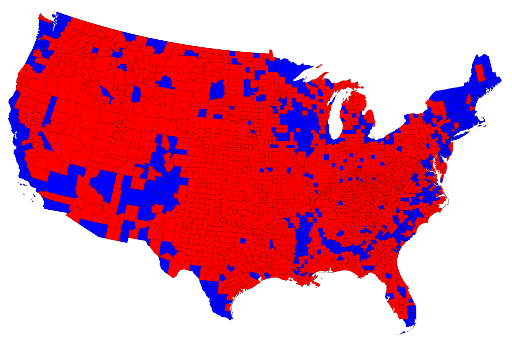
Now remember, despite the map being mostly red, Obama won 5 million more votes than Mitt Romney in 2012. Nevertheless, he lost the vast majority of the counties. In statewide elections, such as for President, governor, and senator, the Democrats can win even if all their voters live within 5 miles of each other, but for the House and state legislatures, the wide distribution of voters helps the Republicans. If the Republicans can use this advantage to capture the state legislatures, they can gerrymander the congressional and state districts as they wish. This situation is not likely to change quickly.
As a concrete example of this effect, in 2012, Democratic House candidates got 50.7% of the vote to 49.3% for Republican House candidates, yet the Republicans won 247 House seats to the Democrats' 188. Part of that is due to gerrymandering done by the Republican-controlled state legislatures in 2010, but Romney actually carried 226 House districts, so the Republican strength in the House is not only due to gerrymandering but to the spread-out distribution of Republican voters as well. (V)
Sanders Approaches Clinton in the Money Race
Both of the leading Democratic candidates, Hillary Clinton and Sen. Bernie Sanders (I-VT) raised huge amounts of money in the quarter that ended yesterday. Clinton pulled in $28 million, but Sanders did almost as well at $24 million (maybe $25 million when the dust settles). Clinton touted the fact that her haul is the largest Q3 amount a nonincumbent has even pulled in during an off year and she is on track to raise $100 million in 2015 alone. Sanders boasted that he has reached the 1-million donor mark faster than any candidate in history. By now it is clear that Sanders is no fluke who will flame out due to lack of funding. What he needs to do now is convince minority voters that he understands their problems and represents their interests.
Vice President Joe Biden, who has announced that he is considering the possibility of potentially maybe contemplating a run, must look at these numbers with alarm. He has to be thinking: "How am I going to ever catch up?" (V)
Republicans Consider New Primary Systems for 2020
Although the two parties don't agree on much, one thing they actually do agree on is that the current primary system is broken. Two small and very unrepresentative states, Iowa and New Hampshire, go first, and then the media declares the show over. In recent years, South Carolina and Nevada were added, making the system better, but after that it becomes a mess, with states trying to leapfrog each other to have bigger say in the process. The whole thing is chaotic and no way to pick Presidential candidates. Until now, nobody dared to talk about changing the system for fear of upsetting Iowa or New Hampshire, which firmly believe they have a constitutional right to go first and second, respectively.
Now, RNC chairman Reince Priebus has openly suggested the need for a change in 2020. A couple of variants are possible. In one of them, the four early states continue to hold their events in February, just to placate them. But starting in March, the country would be divided into regions and each region would hold its own super Tuesday two weeks apart. For example, the regions could be the Northeast, the South, the Midwest, the interior West, and the Pacific Coast states. The order of the regions' elections would be chosen at random in 2020, but in 2024 the 2020 lead-off region would go last and the 2020 #2 would go first, with the rest moving up a notch. In a cycle of 20 years, each region would have a shot at going first. The whole process would take 10 weeks from the first Tuesday in March. If the RNC actually adopted this plan, the Democrats would almost certainly use it as well.
Keeping the four small early states has some value, even though they are not so representative. It is possible for an unknown candidate to campaign heavily in a small state and do well in its primary and thus become known. If Florida went first, an unknown candidate would need to raise $50 million in order to compete at all. Having the states bunched by region has several advantages. First, each region would feel its voice is being heard. If Illinois, Texas, Oregon, and Georgia voted on the same day, it might be hard to draw conclusions if different candidates won different states. Second, by concentrating the action for a two-week period in a single region, travel costs for the candidates are lowered and the candidates get better exposure in that region. It might also make sense to have a debate in each region at the start of the two-week period. Whether Priebus actually follows through remains to be seen, but the idea makes a lot of sense. (V)
October Run-down of the Republican Candidates
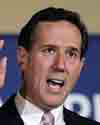
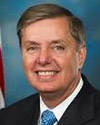
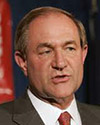
Below is our October list of 2016 Republican presidential candidates in roughly the order of most likely to be nominated to least likely. The strengths and weaknesses of each one in the primaries are listed. Note that what is a strength in the primaries may be a weakness in the general election and vice versa. For example, Jeb Bush's wife is a Mexican-American, which may hurt him in the primaries but help him in the general election.
It will be interesting to look back on this list next November. No doubt people will say: "How could they have been so wrong?" But remember the Oct. 2007 list from everyone had America's mayor, Rudy Giuliani, crushing the competition and the Oct. 2011 list had America's cowboy, Rick Perry, on top.
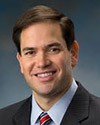
A change from the September list is that now Sen. Marco Rubio (R-FL) edges out fellow Floridian Jeb Bush by a hair. Bush shot up to the top when he announced on the strength of his last name and the connections that implied. But Bush has been a disappointment to his backers. He is a smart, serious, wonkish candidate in a year that seems to favor stupid, frivolous, glib candidates. He's also made a number of serious gaffes, most recently saying that blacks want "hope" not "free stuff." Factually, it's true, but it comes over as a continuation of Mitt Romney's remark about 47% of the country being moochers. Who knows what other gaffes we might be treated to in the coming half year.
Rubio is acceptable to the establishment. He is young and inexperienced, but so were John F. Kennedy and Barack Obama when they ran. It's not always fatal. With Rubio as candidate, the main bumper stickers his campaign will be selling are "No dynasties" and "Time for a new generation." He has plenty of weaknesses, too, but so do all candidates. So far, Rubio has performed well and for donors and other establishment types disillusioned with Bush or stranded after Walker's departure, he could be a good choice.
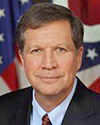
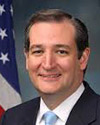
We still believe Gov. John Kasich (R-OH) is a sleeper candidate. Not so much pizazz, but 18 years in the House and two terms as governor of a key swing state would easily make him the establishment favorite if both Bush and Rubio fall. His strategy is don't make any mistakes and hope the others collapse. Ted Cruz rates #4 because he could sweep the South on super Tuesday and he has a lot of money. And although it seemed inconceivable 3 months ago, even Donald Trump now has an outside shot if he can hang onto 20% of the vote until the winner-take-all primaries, although behind the scenes the party will do everything humanly possible to stop him.
October is crunch time and the November list will probably be very different. To start with, it will be a lot shorter as some of the weaker candidates are likely to drop out when their Q3 funding reports come out by Oct. 15 (yes, Bobby Jindal, we're looking at you). Jeb Bush had better start looking like the candidate his backers were expecting or all the energy could move to Rubio or Kasich. Finally, there is another Republican debate in October, on Octo. 28 at the University of Colorado at Boulder. This time candidates have to be polling 3% to make it onto the main stage and 1% to join the kiddies table. It is likely that both debates will be much smaller than the previous ones and candidates not making the main debate this time will be looking for new jobs by November.
The Senate races page has also been updated today. (V&Z)
| Candidate | Advantages in Primaries | Disadvantages in Primaries |
 Marco Rubio |
|
|
 Jeb Bush |
|
|
 John Kasich |
|
|
 Ted Cruz |
|
|
 Donald Trump |
|
|
 Carly Fiorina |
|
|
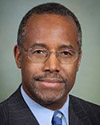 Ben Carson |
|
|
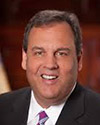 Chris Christie |
|
|
 Rand Paul |
|
|
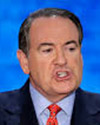 Mike Huckabee |
|
|
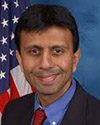 Bobby Jindal |
|
|
 Rick Santorum |
|
|
 Lindsey Graham |
|
|
 George Pataki |
|
|
 Jim Gilmore |
|
|
Back to the main page